A |
一键部署OpenClaw 广东商标协会日前正式发布“湾区之光”三十年TOP30广东高价值商标品牌名单,“ARROW箭牌”成功入选。 The Build Back Better World (B3W) program was pompously announced by the club of seven developed nations to counter China's Belt and Road at the G7 Summit in Cornwall in July 2021. However, little had been heard of the G7's endeavor since then. In June 2022, the Group of Seven decided to breathe new life into the project.,"So far, America has failed to build momentum on its plan to Build Back a Better World," says Francesco Sisci, a Beijing-based China expert, author, and columnist. "However, with this new G7 plan, which includes other countries, this momentum could start to be built. It is a question mark. Nobody is sure until things are realized. But you cannot just underestimate and dismiss this plan, because there is a large commitment of many countries with a large economy and this plan could make big sense.",The G7's grand design envisages laying a secure sub-sea telecommunications cable that will connect Singapore to France through Egypt and the Horn of Africa; creating a COVID-19 vaccine plant in Senegal; expanding solar projects in Angola, including solar mini-grids and home power grids; and establishing an innovative modular nuclear reactor plant in Romania, among other issues.,The US president pledged to mobilize $200 billion in investments in global infrastructure projects over the next five years. The overall investment, including G7 member states and private capital, is expected to reach $600 billion.,"With two competing plans - size matters, at the end of the day," says Sisci. "That is, China may be able to immediately finalize a lot of money in a short time in a number of projects. The G7 countries could be slower, but eventually they could build up momentum and they could channel much more money much more effectively, perhaps, in a much larger number of projects which could stifle Chinese projects.",Sisci suggests that the club of developed capitalist countries "may end up being more effective in many ways [than China], a smaller non-capitalist country.","China, but also Russia, by far, don't have the size, the gravitas to oppose even a divided G7, which is coming together because of this opposition to China or Russia-driven projects," he notes.,UK's Looming Recession is Self-Inflicted, BoJo and BoE are to Blame, Economists Say19 June, 12:09 GMT,G7 Economic & Geopolitical Hurdles,However, some other observers express skepticism over the ability of the US and G7 to implement the project given record-high inflation and cost of living crisis currently engulfing the states. The US, British and European central banks are struggling to tame skyrocketing inflation by raising interest rates to reduce demand, which is prompting recession fears.,"Washington claims they are going to be sending over $200 billion. But where's the money coming from and how is it going to be really used?" asks Thomas W. Pauken II, the author of "US vs China: From Trade War to Reciprocal Deal," a consultant on Asia-Pacific affairs and a geopolitical commentator.,He notes that previously the US Senate voted Biden's landmark Build Back Better initiative down, and for good reason, as Republican congressmen feared that the Democratic administration's spending spree would fan inflation and increase an already bloated national debt.,Pauken also expresses bewilderment over the G7's apparent readiness to embark on the bold international project at a time when the group is involved in the Ukraine crisis with the UK trying to keep the military conflict dragging on. "I mean, it's laughable that they have to think about [competing with] China at this time when they're on the brink of a major war in Europe," the commentator remarks.,Challenge or Opportunity? How China's Digital Silk Road May Change Global Technology Order16 April 2021, 04:00 GMT,Meanwhile, the G7's Global Investment and Infrastructure Partnership cannot be regarded so far as a viable alternative to the Beijing-led Belt and Road Initiative that has been implemented for slightly less than a decade, according to Pauken.,"First of all, [the G7] actually need[s] to make these projects work," says the geopolitical commentator. "Other than that solar plant in Angola, I don't see any of these initiatives really working.",In particular, China invested almost $59.5 billion in its comprehensive infrastructure project in 2021 alone. When it comes to crucial elements of the project, the West appears to be lagging behind. While the G7 is still considering building a subsea cable linking Europe and Southeast Asia, China kicked off its Digital Silk Road (DSR) almost seven years ago. The DSR's backbone is the Pakistan and East Africa Connecting Europe (PEACE), a 9,300 mile long subsea cable network meant to tie Asia, Africa, and Europe together. The network is designed to transmit over 16Tbps per fibre pair with its Mediterranean section going from Egypt to France having already been laid.,WFP Announces Cuts in Food Rations for Refugees in East, West Africa Due to Lack of Funds20 June, 17:13 GMT,Are Emerging Economies Interested in the G7 Agenda?,There is yet another problem as to how to make these Western projects attractive for Global South nations, the Asia Pacific expert continues. In particular, the G7 has been pushing ahead with a climate change agenda and the plan to cut carbon emissions, which is not relevant for the majority of third-world states which are still reliant on cheaper and more reliable fossil fuels and coal plants, he notes.,"You also have to deal with auditing issues as well as the so-called climate change consultants who go on the ground and on site," he says. "You have to prove that those infrastructure projects are not causing much of a carbon footprint. But most of the major infrastructure does require a big carbon footprint, especially in the emerging markets, because they don't have the same equipment or they don't have the same standards or labor laws as they would have in Western Europe or the US.",Many emerging economies, including African countries, are beginning to have a growing frustration with the US and Europe, according to Pauken. The reality is that Africans and many of the emerging markets want to focus on economic stuff, he notes. However, when the US officials come in, they're talking about climate change or gender equity, and this is not as interesting to developing nations, the commentator emphasizes.,"[Developing nations] want help on improving their agricultural production levels and boosting their energy capacity, which the Russians and the Chinese have been doing," Pauken notes.,Given all of the above, it is unlikely that the G7's Global Investment and Infrastructure Partnership initiative is going to actually happen, argues the geopolitical commentator.,"They're rebranding a failed policy, thinking it might work by using new names and new mergers. Last time it was separate between the EU and separate between the US and they somehow think that if you combine the two failed projects into one, that this will somehow succeed. That's not going to work in the real world," Pauken concludes.。同期上榜的还有美的、立白、名创优品、慕思、王老吉等一批具有全国影响力的粤籍品牌。

B | 这份名单的出炉,是对广东商标品牌建设成果的一次系统性检阅,也为观察中国制造向品牌经济转型提供了一个微观切口。 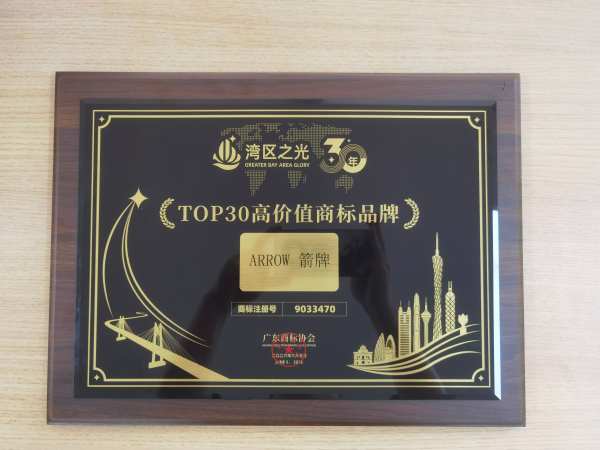
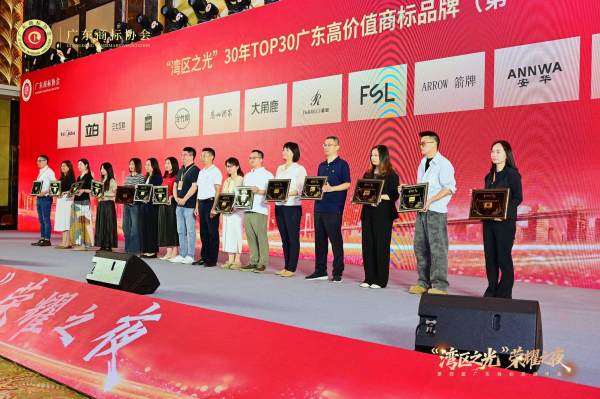 三重滤网:一场关于品牌“质地”的量化考核 “湾区之光”三十年TOP30评选,是广东商标协会成立三十周年之际推出的重磅活动。

C | 与常规的品牌排名不同,此次活动严格依据《广东高价值商标品牌评价规范》团体标准执行,设置了层层递进的入围机制:参选商标须在过去三十年间注册有效且已获评"广东省高价值商标品牌",通过法律状态、使用证据、市场覆盖等多维度的量化评价;在此基础上优中选优,重点考察价值规模位居行业前列的企业;最后经合规审查,确保无严重违法违规行为。

D | 整个流程由企业自主申报,经专家委员会审议产生。这套机制的核心在于"可量化"——不依赖主观评分,而是通过指标体系对商标的法律稳定性、市场影响力、消费者认知度等维度进行综合测算,这更像一次品牌资产的"压力测试",而非简单的荣誉授予。

E | 坐标系中的箭牌:从一份名单看广东品牌的经济地理 纵览这份TOP30榜单,入选企业覆盖了家电制造、日化消费、家居建材、新零售、食品饮料等多个领域。美的代表了中国家电制造业的全球化突围,立白和完美中国构筑了日化消费领域的国民品牌阵地,名创优品则以新零售模式探索出另一条出海路径。 在家居建材板块,箭牌家居与慕思等品牌共同入围。这些品牌虽然在各自细分领域各有侧重,但共同特征是都已完成了从品类开拓者到行业定义者的身份跃迁——它们不再只是某一品类的生产者,而是该领域品质标准与消费认知的塑造者。 箭牌此次入选,正是在卫浴这一细分领域完成了上述跃迁的明证。从陶瓷坐便器起步,到覆盖卫浴全品类的大家居布局,箭牌用三十余年的时间将"ARROW"这一标识从广东佛山的厂房带到了全国消费者心中。

F | 它与美的、立白等不同领域的领军者同台,本身就是品牌价值最有力的注脚。 商标即资产:箭牌品牌价值的底层逻辑 商标的价值,最终要回到使用和保护两个基本面来衡量。 在法律层面,核心标识“ARROW”于2008年被认定为驰名商标,与中文“箭牌”形成稳固对应,公司持续通过续展与防御性注册构建起严密的法律护城河。在市场层面,箭牌拥有10大生产基地与超过13000家线下网点,2022年于深交所上市,产品覆盖全国并出口60个国家和地区。这一体量赋予了“ARROW”商标广泛的人群触达与坚实的营收支撑,两者共同构成其商标价值评估中最核心的底层资产。 2026年1月,箭牌家居正式入选央视《大国品牌》,成为卫浴行业为数不多获此殊荣的企业。双方以“大国人居,箭证美好”为主题建立战略合作伙伴关系,致力于在国家品牌战略框架下推动家居产业高质量发展。

G | 箭牌家居集团副总经理卢金辉表示,“大国品牌”的价值不止于商业成就,更在于对“大国人居”美好生活的切实贡献。这一动作虽不直接作用于商标的法律价值,但对品牌的情感附加值和公众认知度产生了正向拉动。 从单品到生态:当卫浴品牌接入鸿蒙 在技术维度的布局上,箭牌选择了一条差异化的路径——成为卫浴行业鸿蒙智选的首批生态合作伙伴。目前已成功推出鸿蒙智选智能花洒“智雨精灵”与智能浴霸“雷达浴霸”。

H | 2025年12月,箭牌“智雨精灵”花洒在京东首发上市,28小时内销量突破2500套,销售额达426万元,打破智能花洒全行业首发纪录。

I | 这一选择的特殊之处在于,它并非简单的“产品+芯片”组合,而是将卫浴设备置入鸿蒙的分布式生态中。公司正全力深化鸿蒙智选生态融入,实现从单一智能单品向跨设备联动的整体智慧卫浴空间延伸,打造差异化智慧生活体验。在技术层面,箭牌智能花洒搭载自研AirPlus富氧增压技术,针对性解决高层住宅、老旧小区水压不稳、出水刺痛等长期痛点;智能浴霸首次在行业内搭载双毫米波雷达系统,实现对人体进入浴室的精准识别。

J | 智能马桶领域近期获得的多项发明专利授权也表明其在核心品类上保持着技术迭代的节奏。  从品牌价值评估的角度看,技术能力的注入使商标从单纯的“识别符号”升级为“体验载体”。当消费者因为某项技术创新或生态体验而选择箭牌时,商标本身便承担了品质背书和信任传递的功能——这正是高价值商标区别于普通注册商标的本质所在。

K | 此次入选“湾区之光”TOP30,可以视作箭牌家居品牌建设的一个阶段性注脚。在家居行业从增量竞争转入存量博弈的当下,商标作为凝结了法律保护、市场认知和技术积累的复合资产,其战略价值正在被重新审视。放眼未来,在鸿蒙生态的深度融入与大国品牌叙事的双重加持下,箭牌所锚定的已不仅是卫浴行业的领先位置,更是智慧人居时代的生活方式定义权。这份品牌资产的复利效应,才刚刚开始释放。
申请创业报道,分享创业好点子。点击此处,共同探讨创业新机遇!。

L |
Current article:http://pnkbvns.shuicengchongmingnouhuawang.bond/list_aoo7/ets.html
Published on:00:00:00